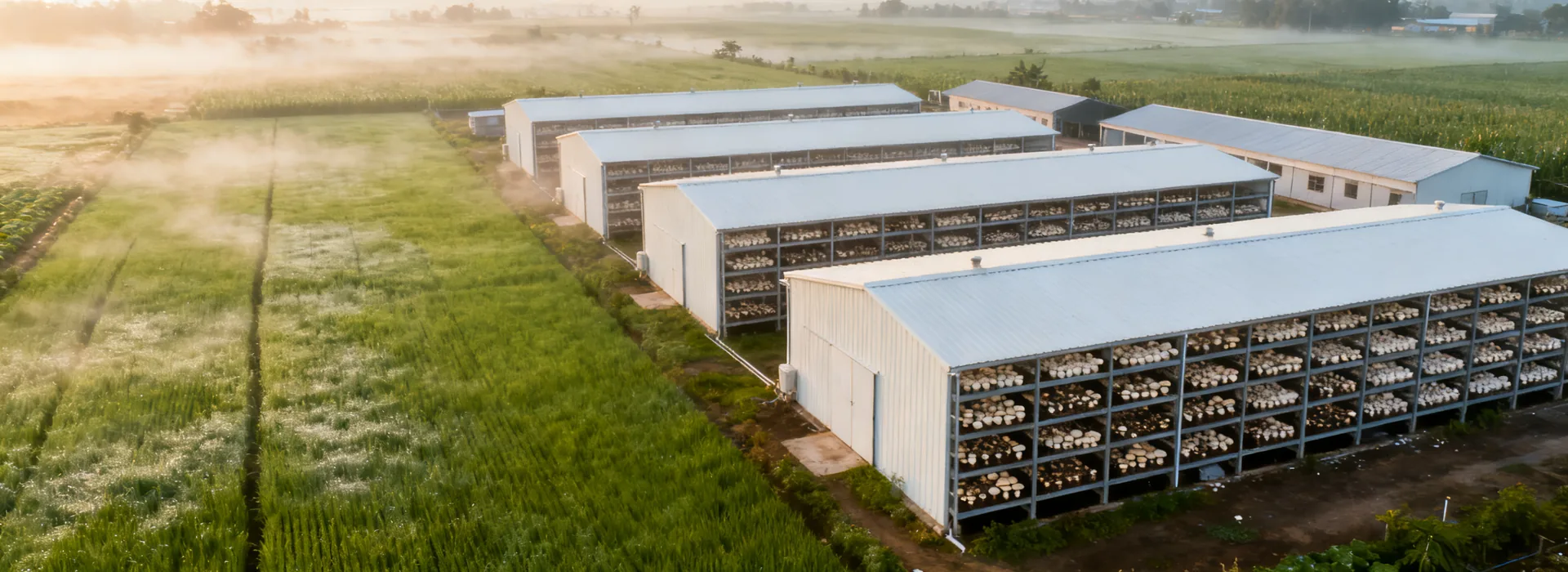
Aerial view of mushroom cultivation houses beside crop fields

Crop & application matrix

Mushroom Mountain applications: match spawn and substrate to the crop house you run

Mushroom Mountain applications are organized by crop and room type — shiitake blocks, oyster houses, button tunnels, greenhouse mixed crops and research labs — so procurement can see equipment families against humidity, moisture and inoculation needs.

Application matrix

Crop house needs versus recommended equipment families

Use this matrix when writing RFQs. Coverage area here means productive room footprint; moisture target refers to substrate checks before bagging.

Crop / scene Operational need Recommended family Key checkpoint
Shiitake block farmsHardwood blocks in multi-tier rooms Stable fruiting humidity and lot-traced spawn inoculation Shiitake spawn + humidity probes + spare seals 85–95% RH fruiting band
Oyster housesFast bag cycles High weekly throughput with moisture-gated bagging Cultivation substrate + growing kits + sealer spares ~14% substrate moisture
Button mushroom tunnelsPhase compost lines Airflow and compost temperature discipline across tunnels Inoculation tools + fan spares + commissioning Tunnel map + probe calibration
Greenhouse mixed cropsRooms beside shade screen bays Shared utilities without RH cross-contamination Growing kits + Field Service humidity audits Night RH swing after glazing choice
Research / training labsSmall controlled rooms Repeatable trial batches with clean documentation Trial kits + spawn inoculation coaching Lot labels per trial week

Scene notes

How buyers usually sequence the first season

Shiitake

Start with spawn inoculation training and probe placement before expanding block counts. Coverage area planning in hectares of outdoor logs is less useful than counting productive room shelves and flush intervals for controlled fruiting humidity.

Oyster

Prioritize substrate moisture gates and sealer spare kits. Fast cycles punish wet loads and equipment gaps more than slow shiitake blocks do.

Greenhouse

When mushroom rooms share a greenhouse envelope, decide glass versus polycarbonate greenhouse glazing for night insulation first. Then set fertigation and shade screen schedules so irrigation mist does not spike fruiting RH unexpectedly.

Industry decision note

Glass vs polycarbonate when mushroom rooms sit inside a greenhouse shell

Glass argument

Higher light transmission helps adjacent leafy crops and can extend service life for high-value greenhouse vegetables. For mushroom rooms that only need dim conditions, the light advantage is mostly irrelevant and night heat loss can widen RH swings.

Polycarbonate argument

Better insulation and impact resistance stabilize overnight fruiting humidity. Most Mushroom Mountain greenhouse-adjacent installs choose polycarbonate panels for the mushroom bay, then keep glass or polycarbonate decisions separate for the vegetable spans.

Need a matrix mapped to your rooms?

Send crop type, room count and substrate tons. We will mark the equipment family and Field Service window.

Contact the cultivation desk

Required
Required
Valid email required
Required
Required
Include species, substrate volume and timing